·7858 words·37 mins
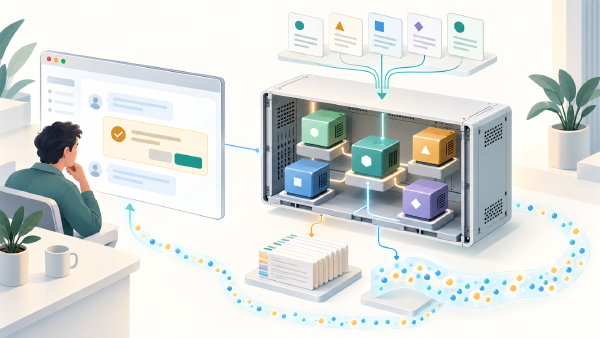
Build an evaluation harness that connects agent routes, tool evidence, traces, and calibrated judges to explain why an application succeeds or fails.
·4006 words·19 mins
The final Akgents chapter: turn a catalog-defined team into a service with a browser client, durable history, and human approvals over HTTP.
·1973 words·10 mins
See how a Qdrant contribution turned Akgents vector search into a pluggable backend architecture, then follow the sample agent team.
·5625 words·27 mins
Move Akgents team configuration from Python into a validated, referenceable catalog without changing the runtime.
·3325 words·16 mins
Combine BaseAgent, typed messages, read-only tools, deterministic routing, and human approval in one durable Akgents workflow.
·2986 words·15 mins
Build reusable Akgents tools with ToolCard, ToolFactory, observers, channels, MCP, and one observable event stream.
·2659 words·13 mins
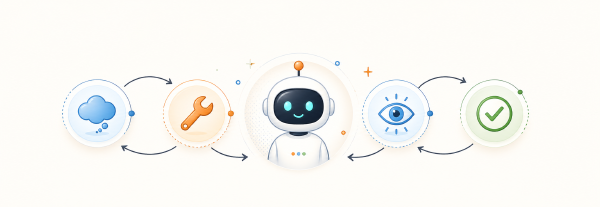
Give an Akgents application an LLM, tools, budgets, context, capabilities, and a visible ReAct loop.
·3914 words·19 mins
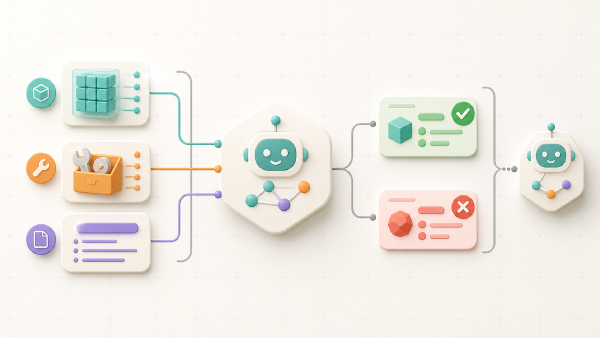
Build a typed Pydantic AI case agent with dependencies, outputs, handoffs, Capabilities, MCP, and observability.
·2990 words·15 mins
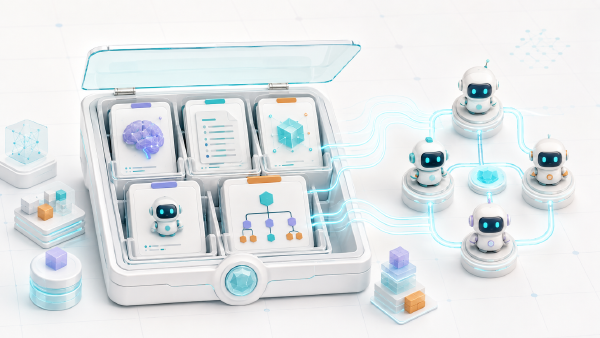
Learn how akgentic-team turns an actor tree into a persistent, resumable team with cards, metadata, events, and lifecycle.
·2980 words·14 mins
Learn the core Akgents concepts by following a small agent team that triages a case with human approval.